Tracing the Ghost: Savouring Flames
In Conversation with Ludi Huang
Curated by Sylvia Liu
1. What are your top three comfort foods? Sushi, Coke, Sweet and sour pork ribs
2. Describe your last meal before you left home? Home-cooked meal paired with a spicy pickled side dish
3. If you were a flavour, what would you be? Spicy
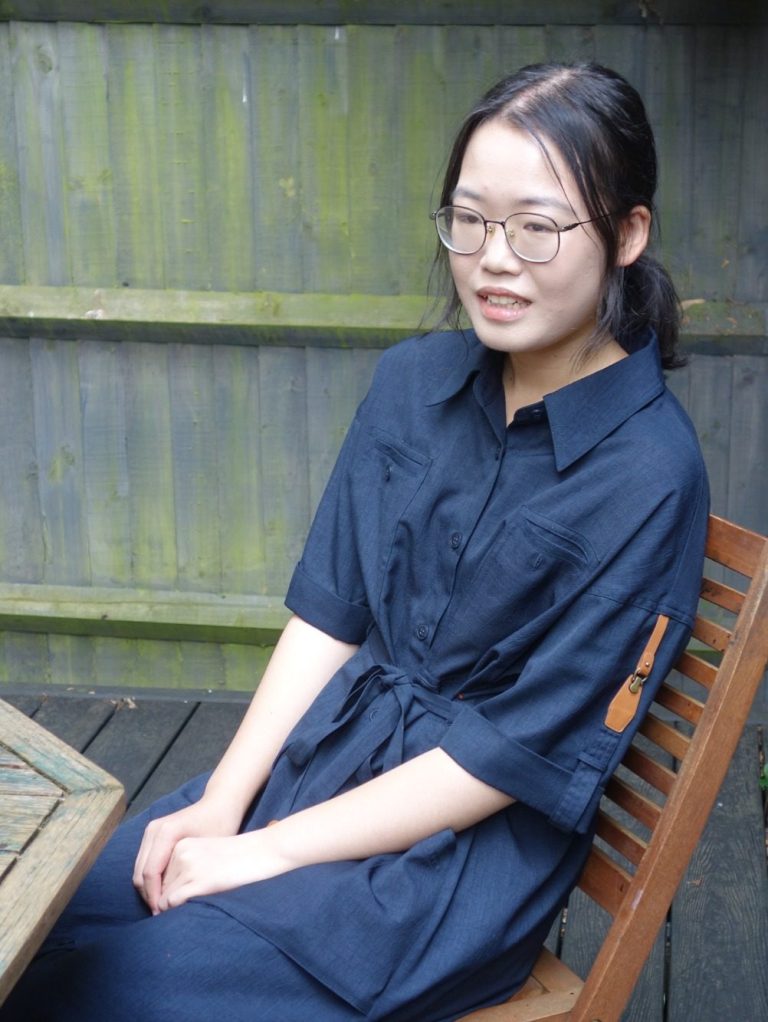
Ludi Huang’s practice spans illustration, photography, graphic design, and 3D production, rooted in a curiosity about urban culture. Ludi wanders through the city in search of these fleeting or easily overlooked traces, gathering fragments that are on the verge of disappearing. By translating them into new visual narratives, Ludi seeks to reconstruct images and spaces that bridge past and present. Their works do not simply document but reimagines, weaving together reality and imagination in ways that encourage audiences to reflect on the fragility of history, the instability of identity, and the fluidity of memory.
Sylvia:
How have your surroundings and experiences shaped who you are, and how do you connect to your creative practice?
Ludi:
I grew up in a small, cramped city in Sichuan, China, where the old town centre was noisy, crowded, and full of dilapidated buildings. Growing up in that environment made me drawn to nostalgic culture and objects marked by time, which naturally influence my projects.
My hometown is even more remote, deep in the mountains and quite underdeveloped. I visit every year and often see ancient temples and towns that are unprotected and in a state of disrepair. Witnessing these fading places and memories makes me want to preserve them, though my individual power is minimal. This motivated me to focus on heritage and culture in my work.
Sylvia:
You focused on the old Chinatown site here. Does it connect you to Sichuan?
Ludi:
Not directly. It's more of a bridge linking me to the local Chinese community and its broader cultural heritage. For this project, I used new methods like behavioural psychology and geography. Walking the streets, looking for traces of the past, reflecting and connecting led me to create a map.
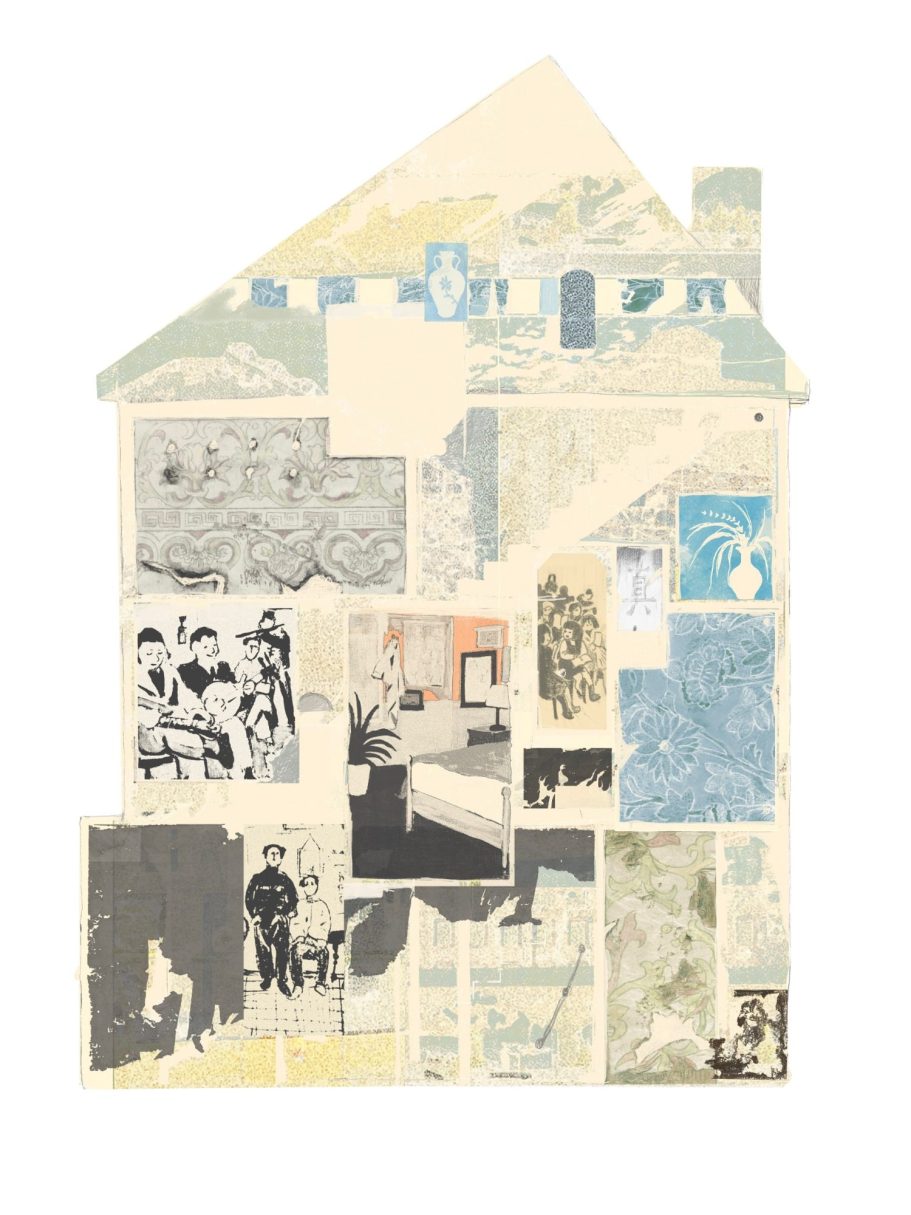
It was my first time researching in archives, meticulously recording documents. I also studied London's heritage, including secondary listed buildings. An intriguing aspect is "ghost signs", faded adverts painted on buildings before 1920, now weathered relics of early advertising. Archaeologists refer to these as "ghost signs," and I incorporated them visually. This research style might inspire my future heritage studies in China.
Sylvia:
Hearing you describe it, it reminds me of the term "hauntology," with this eerie, haunted quality. Do you see your work fitting into that narrative?
Ludi:
I don't see my work as ghostly or eerie. It's more about nostalgia, the fleeting, perceptible traces of the past, rather than something haunted.
Sylvia:
What impact or conversations do you hope your project fosters?
Ludi:
Initially, I didn't expect to delve so deeply into the subject. However, I uncovered many subtle traces of past lives hidden in photos and documents, some of which were not immediately obvious. For example, one sign led me to discover an overseas anti-Qing Dynasty alliance!
These discoveries could be published or exhibited to raise awareness of the struggles and resilience of the workers and residents who built Chinatown. Visual methods could invite people to imagine a reconstructed space, creating a socially meaningful narrative. Someone needed to tell these stories.
Sylvia:
How did you come to choose ceramics as your creative way to translate your research?
Ludi:
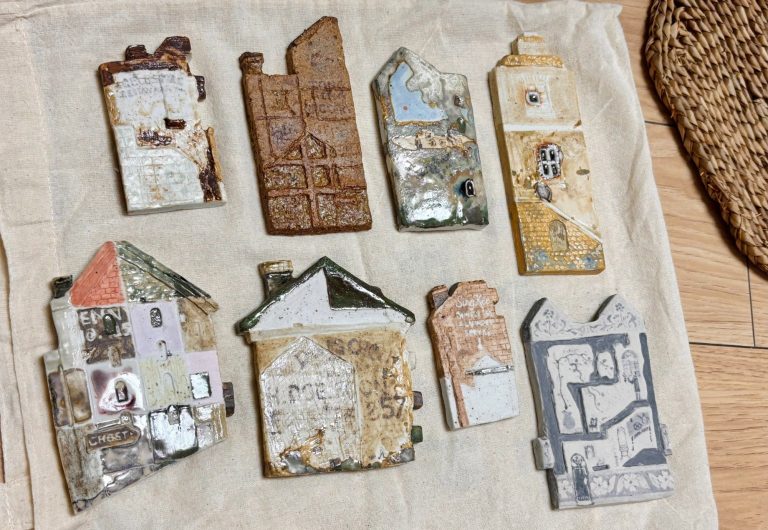
Ceramics was experimental; I'm not skilled or knowledgeable about it. I knew some special glaze effects existed, so I found samples and tested them in the studio. Sometimes I couldn't find exact glazes, so I improvised. I randomly applied glazes on clay blocks, not knowing what would happen.
My teacher warned that some could explode in firing, but I embraced all possibilities. These unpredictable marks can't be consciously copied; accidents, such as explosions or slippage, create authentic traces linked to the past. It was liberating and fun. Ceramics offer random textures that hand-painting can't achieve, making it a fitting medium.
Sylvia:
That's fascinating! So the process made your research tangible, and the risk of breakage added to that. Our exhibition explores cultural identity, fluidity, and in-betweenness. How do you see your project connecting?
Ludi:
The exhibition's focus on cultural identity resonates with my work, although I prefer macro narratives over personal micro-stories. A classmate reminded me that even broad narratives carry personal emotion, which I value.
My project is about quietly telling history, like old buildings standing silently, revealing stories slowly. It's about many Chinese identities, not just mine, and helps me grasp my own identity, giving me a sense of holding onto a root. Someone said I captured the last glance from that era, which I found charming.
Sylvia:
What are you going through now, personal change, emotions, geography, or art?
Ludi:
Creatively, I'm researching architectural and urban languages, and preparing for future projects. I'm forming a small collective with classmates to contribute more in the heritage sector as a group, since individual power is limited. We're still in the planning stages and not yet active publicly, but we hope to grow.
Looking ahead, I'm anxious about returning home, fearing I'll lose motivation or burn out in a competitive work environment. I'm seeking ways to maintain this collective spirit.
Sylvia:
Did you seek a sense of belonging when starting this project?
Ludi:
Seeking belonging takes many forms. Initially, I wasn't focused on the Chinese community's belonging, but on finding an engaging urban visual language. I began out of curiosity, with no grand ambitions, but later found the project offered comfort to my identity. It feels like the right work at the right time and in the right place. Only I could create this here, with access to London's archives and museums. It's deeply connected to my studies, and it holds meaning both socially and personally.
Recipe.
Savouring Flames
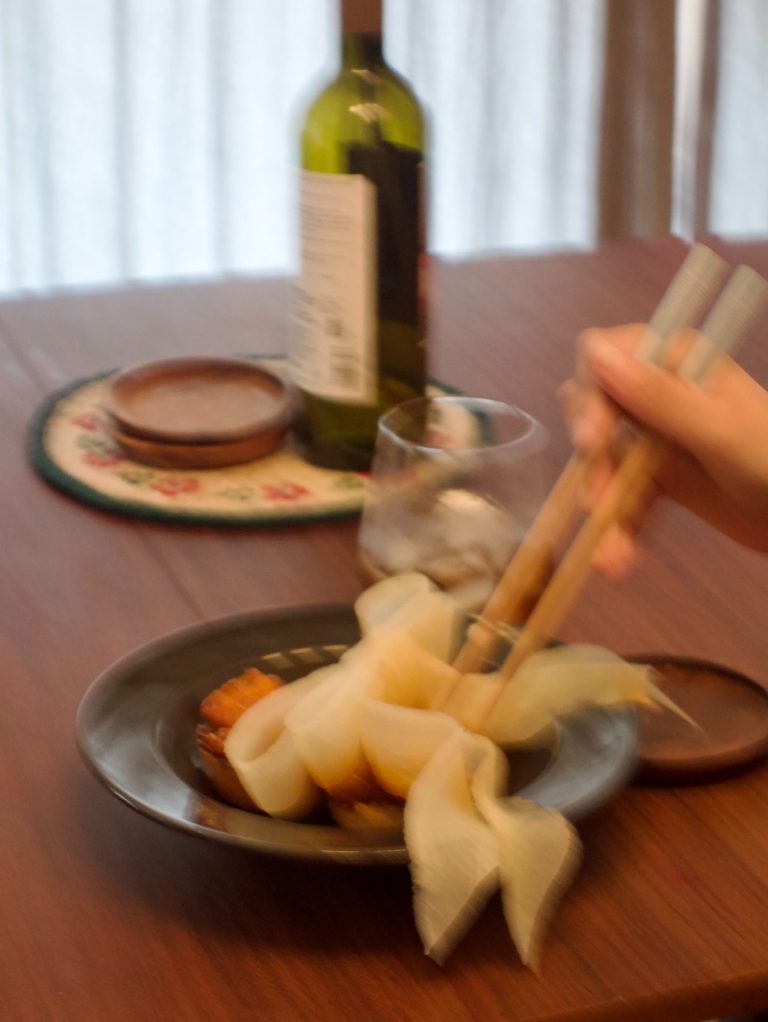
Korean Fried Chicken Crispy Rice Bite
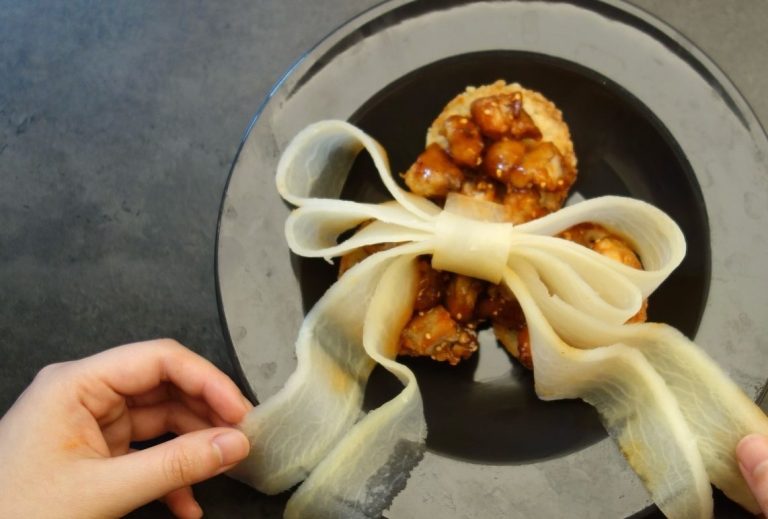
For Ludi, spicy flavours evoke a profound sense of home. While the spiciness differs in character, the combination of Korean-style fried chicken and danmuji-pickled radish reminds the curator of Ludi's practice, which explores urban ruins and ghost signs, linking these elements to history and heritage. The interplay between the ephemeral, ghostly aspects and the rooted cultural heritage served as the inspiration for this dish.
Instructions
- 350 g Bibigo frozen yangnyeom chicken (Korean sweet and spicy fried chicken)
- 1 pack whole danmuji (Korean-style pickled daikon radish)
- 200 g cooked sushi rice
1. Spread the cooked rice on a flat sheet tray lined with plastic wrap. Press down and form a 1.5cm thick slab. Put it in the fridge to chill.
2. Use a fruit peeler to make ribbons of danmuji.
3. Cook the Bibigo frozen yangnyeom chicken according to the package instructions.
4. Cut the rice slab into bite-sized pieces, and fry them in neutral oil until golden brown on both sides.
5. Put the prepared Korean fried chicken on top of the crispy rice bites, and garnish it with danmuji ribbons formed as a bow, and serve.