Nostalgic Ephemera:
Parcel of Memories
In Conversation with Amanda Thedrica
Curated by Sylvia Liu
1. What are your top three comfort foods? My mum's chicken soup, Bakmi ayam, Indomie Goreng.
2. Describe your last meal before you left home? My mum's chicken soup with a bowl of rice
3. If you were a flavour, what would you be? Savoury
Amanda Thedrica’s practice explores the intersection of personal memory, cultural identity, and collective storytelling. Working primarily through graphic design, moving image, and participatory methods, Amanda creates works that invite audiences to engage with everyday ephemera as vessels of lived experience. Amanda is drawn to the quiet narratives embedded in the ordinary, a receipt, a family photo, an old train ticket. Her work often returns to the simplicity of being human: how we remember, how we forget, and how we hold on. Whether through print, film, or found objects, Amanda creates work that feels both intimate and shared — an invitation to connect.
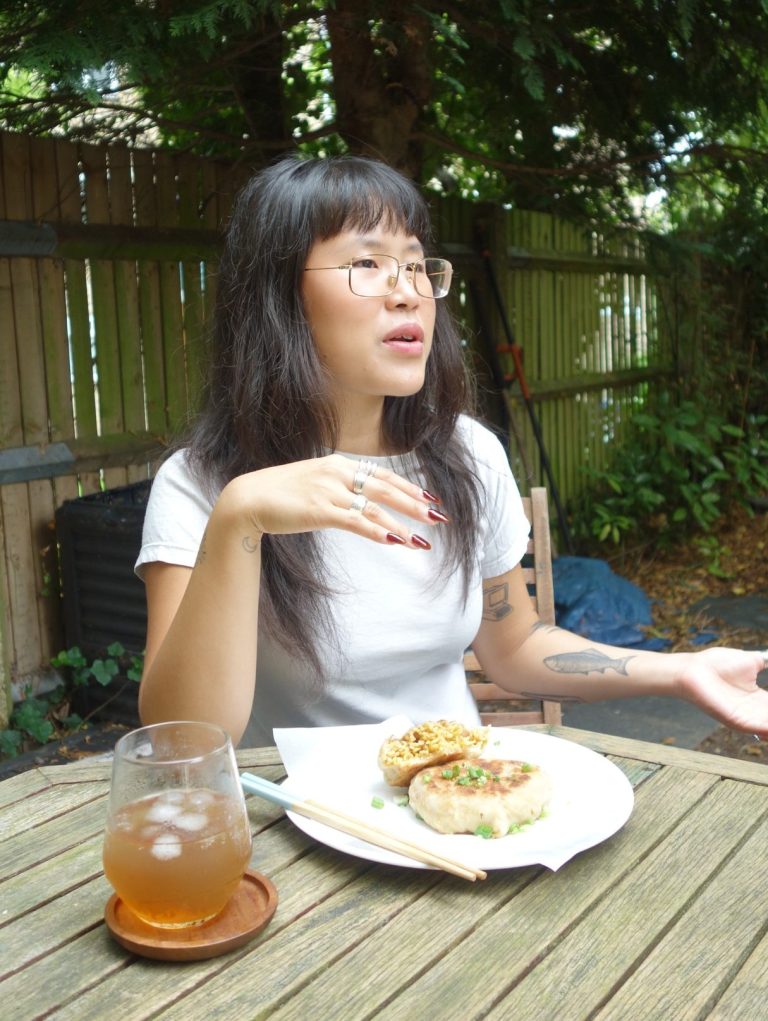
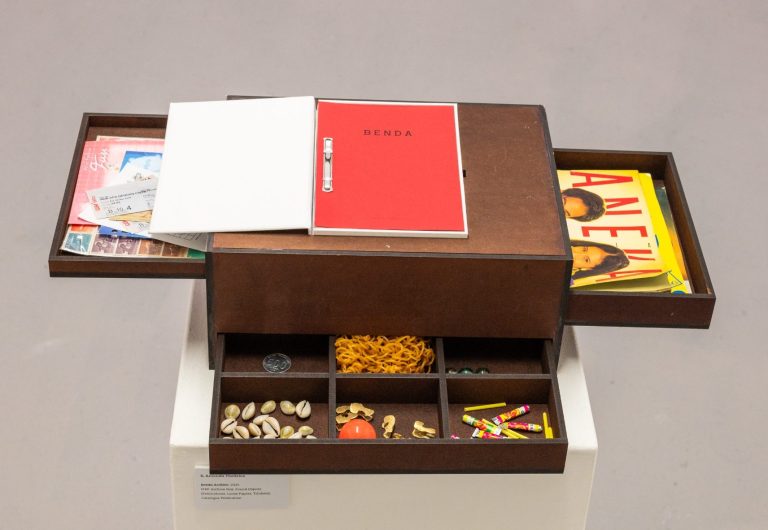
Sylvia:
What made you decide to create the Benda Archive?
Amanda:
I was reflecting on my experience studying graphic design in the UK and realised a recurring issue: it's challenging to find Indonesian design references, whether online or offline. This gap became the central question of my project. I then expanded my inquiry through conversations with Indonesian friends within the art and design community. It turned out to be a shared problem; we lack accessible archives of Indonesian art and design.
Most existing archives are heavily influenced by Dutch colonialism, since Indonesia was colonised by the Dutch. These colonial-era archives were curated from a Dutch, Western-centric perspective, deciding what was deemed worthy of preservation. Even today, it's difficult to separate our narrative from that colonial gaze because the materials were collected and organised by outsiders. This motivated me to see an opportunity to initiate a community-based archive that is accessible and authentic, told from an Indonesian viewpoint rather than an external, Western one.
Sylvia:
I deeply resonate with that. I'm from Taiwan, which was also colonised by the Dutch at one point, so in a way, we're cultural cousins. We face similar challenges with Eurocentrism and the need to decolonise historical narratives as a way to reclaim and define our identities.
Amanda:
Exactly. There's a duality, having a colonial history yet also gaining independence. Both aspects coexist. The key is to focus on authenticity and originality, rather than centring on Eurocentric perspectives.
Sylvia:
That history undoubtedly exists, so it must be acknowledged.
Amanda:
Yes. When researching for this archive box, I had the opportunity to visit independent archival spaces in Indonesia, such as the Indonesian Visual Art Archive (IVAA) in Yogyakarta. It inspired me further to use my project as a platform to contribute to this initiative. IVAA houses a library filled with Indonesian art and design books that are nearly impossible to find elsewhere. Even at my university in the UK, Indonesian books are scarce, and those that exist tend to be written by Western authors or influenced by colonial views. This sense of visibility and accessibility really compelled me to start archiving on a small scale, and hopefully, I will expand from there.
Sylvia:
That's wonderful! So is your archive specifically focused on Indonesian graphic design, or do you find a common thread or characteristic in the items you collect?
Amanda:
My archive showcases Indonesian culture and narratives through ephemera — objects often discarded, such as snack wrappers, tickets, and flyers, which are typically regarded as disposable. Preserving these is challenging because they're rarely kept or maintained.
To collect these Bendas — which means ‘objects’ in Indonesian — I circulated a questionnaire within the Indonesian community, asking people to share items that resonated with their experience growing up in Indonesia. The submissions ranged from toys and trinkets to old magazines and children's books. The collection ultimately became very personal, with each object carrying a unique story and personality. Finding the exact items described was challenging, but I sought alternatives that were close in spirit.
Sylvia:
Are you planning to take this project further?
Amanda:
Definitely, my vision is to make the archive accessible to people in Indonesia as well. However, the physical archive box is quite heavy, and transporting it back isn't feasible. I'm exploring ways to create a more portable version, such as a pop-up exhibit or similar format, and I've also started an Instagram page to raise awareness and encourage broader participation.
Sylvia:
When I first saw your work, I was deeply moved. Do you think your archival work contributes to shaping a contemporary Indonesian identity?
Amanda:
I wouldn't say it creates a modern Indonesian identity outright, but it certainly offers insight into contemporary perspectives on identity. Our culture and customs have deep roots, but our self-perception evolves, especially when we live abroad. For Indonesians studying overseas, including myself, this distance brings new perspectives on identity and lifestyle that we often take for granted back home.
Missing home fosters a desire to decolonise narratives and understand identity as fluid and evolving. I was particularly influenced by Stuart Hall's theory that identity is never fixed; it shifts in response to social contexts, experiences, and individual personalities. Conversations with fellow Indonesians have been eye-opening; we've moved beyond a victim mindset toward proactive cultural empowerment.
Sylvia:
That's fascinating. Are you someone who actively seeks out this sense of belonging?
Amanda:
Absolutely. Much of my work begins with introspection and personal reflection, and then expands outward to resonate with a broader community. I find beauty in small things: nostalgia, a sense of belonging, and personal stories. The archive is an excellent example; reading submissions of seemingly simple objects with deeply personal meanings is incredibly rewarding.
I also discovered the term 'sonder' — the realisation that everyone is living their own complex, rich life as the main character in their own story, filled with stories we rarely know. This resonates deeply with my perspective on the world and informs my interactions and artistic approach.
Recipe.
Parcel of Memories
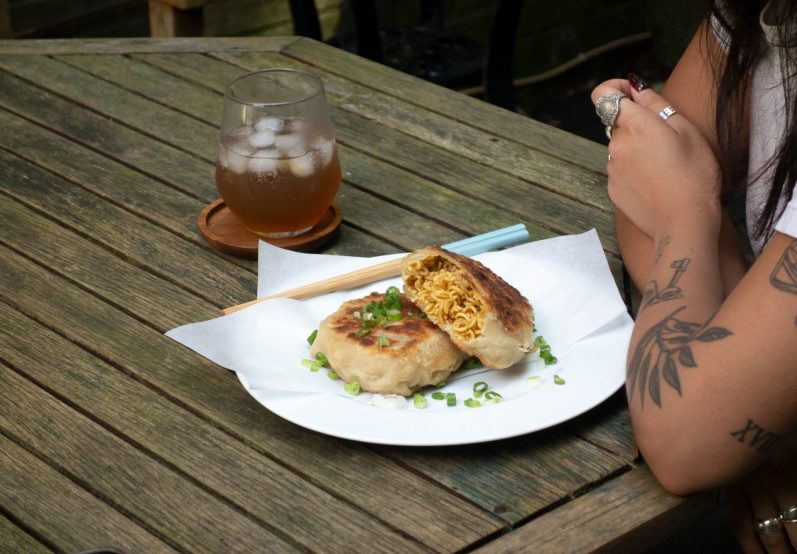
Chicken and Indomie Goreng Martabak
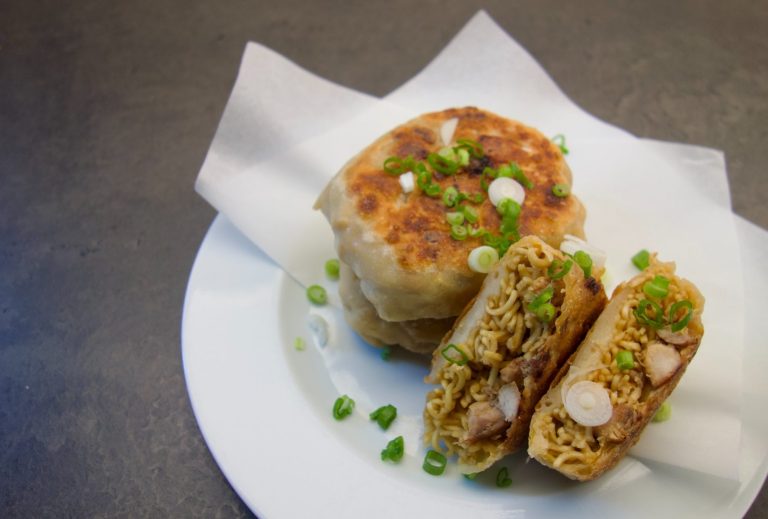
Martabak telur is a traditional Indonesian savoury parcel-shaped pancake that evokes memories of Amanda’s work — an archival box brimming with Indonesian heritage. Traditionally, martabak telur is filled with eggs and minced meat, but in this reinterpretation, the curator has filled the parcel with Amanda’s all-time comfort food: Indomie Goreng. Amanda’s work tells the story of Indonesia, and through this dish, the curator aims to create a safe and intimate space for her to share that story.
For the parcel wrap
- 150 g all-purpose flour
- 75 ml water
- 1/2 tsp salt
- 1 Tbsp cooking oil
1. Mix all the ingredients above together into a shaggy dough ball.
2. Cover and rest in the fridge for 8 hours or overnight.
For the filling
- 2 packs of Indomie Goreng
- 1 skin off chicken thigh
- 1 Tbsp of oyster sauce
- 1 Tbsp of cooking sake
- 1/4 tsp of white pepper
- 2 eggs
1. Prepare 2 packs of Indomie Goreng according to the package instructions and set aside to cool.
2. Chop the chicken thigh into small pieces and marinate with oyster sauce, cooking sake, and white pepper for 10 minutes. Then, sauté in a pan until cooked through and set aside to chill.
3. Beat 2 eggs in a separate bowl, then add the chilled Indomie Goreng and mix well. Let the noodles coat properly with the egg mixture.
Assemble
- Remove the parcel wrap dough from the fridge and separate it equally into 4 pieces.
- Flour the working surface and roll out the dough as thinly as possible with a rolling pin.
- Divide the filling (Indomie Goreng and cooked chicken thigh) into 4 equal portions, and place one portion on the rolled-out wrap.
- Close the wrap like a parcel and pan-fry it in the pan until both sides are golden brown, and serve.